Choose the finish. Consider the space. Specify the assembly. A garage is an application—not a flooring system.
Built around the conditions
Not one product. Not one system. The right system for the job.
What the floor needs to do comes first.
Traffic. Moisture. Sunlight. Temperature. Chemicals. Return to service. We consider these together with the substrate and the finish you want.
Our hands-on work spans decorative resin floors and demanding commercial applications. We’re not tied to one manufacturer or one coating chemistry.
“Epoxy flooring” describes a broad category, not a single product poured onto every floor. The assembly may include repairs, a primer, build or aggregate layers, refinement between coats and a protective finish. Each stage has a different job.
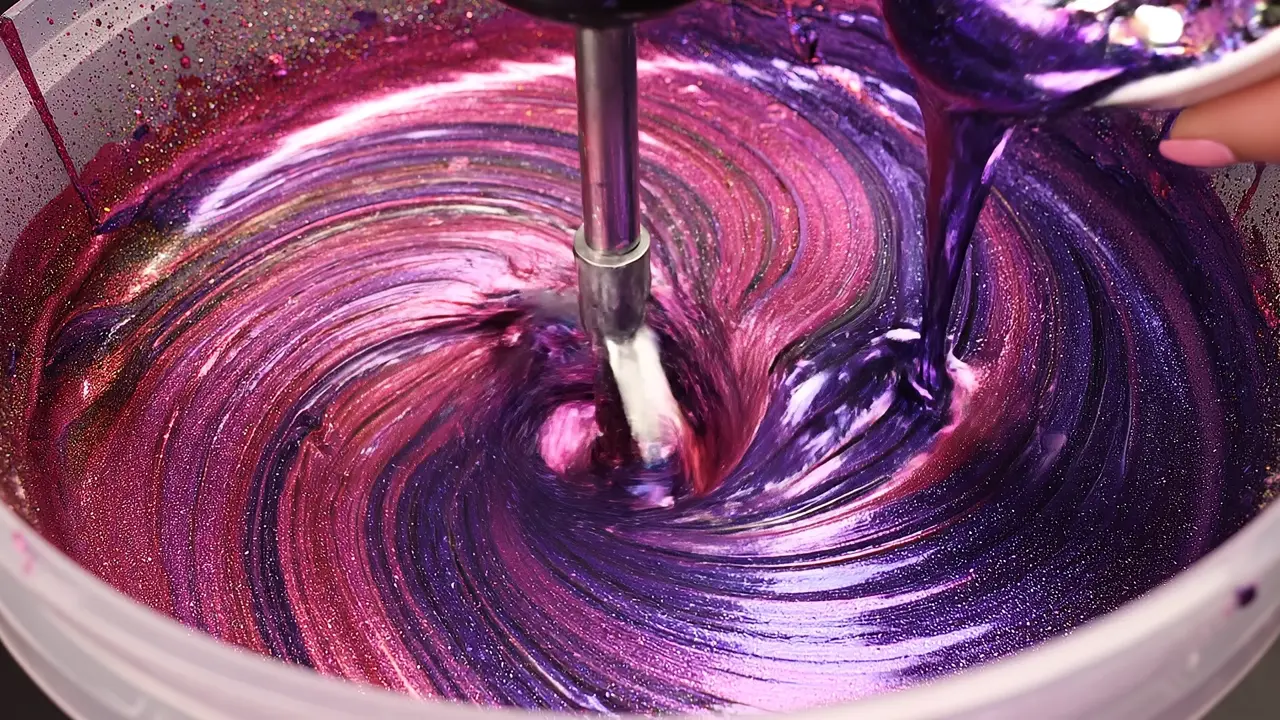
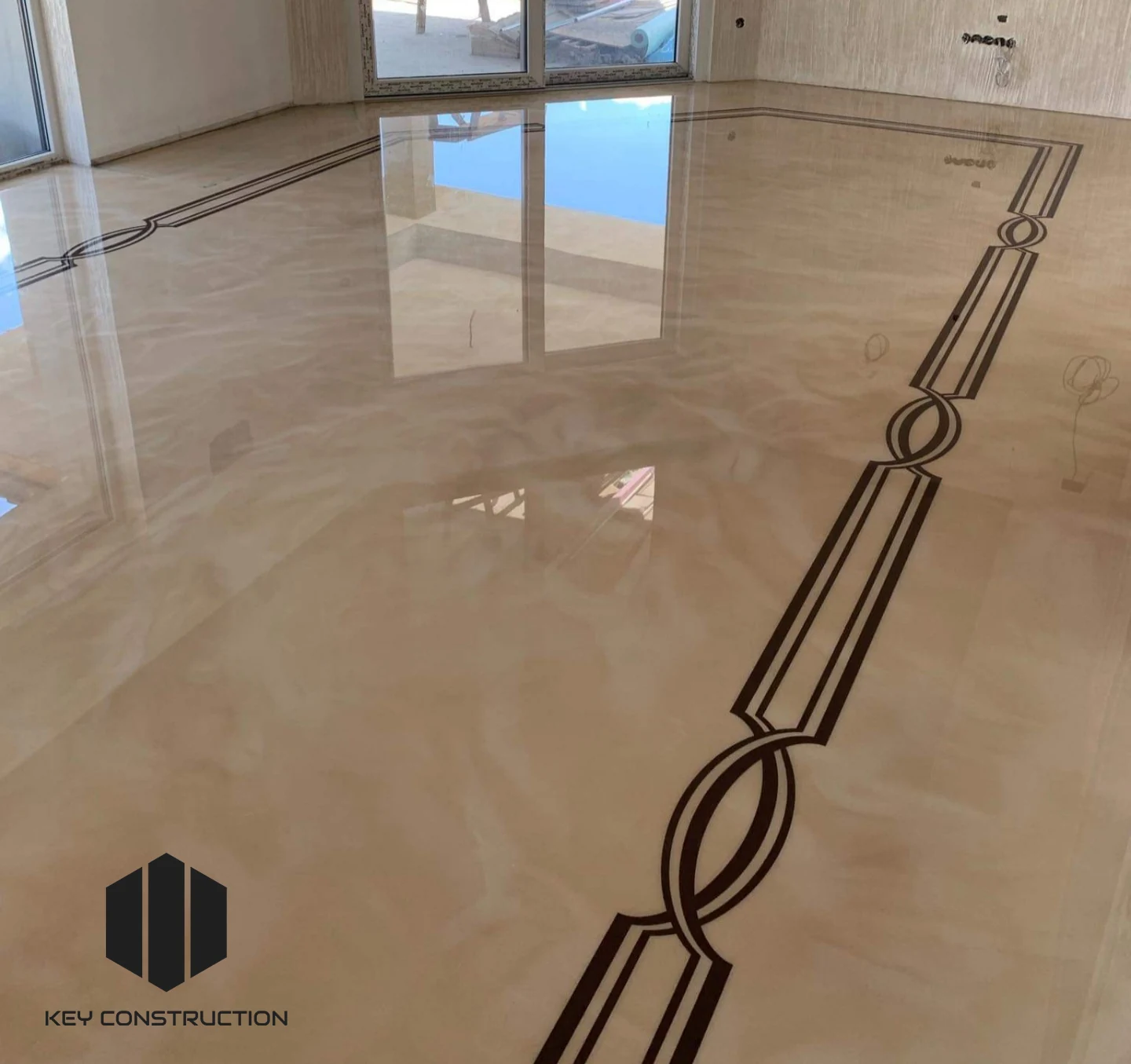
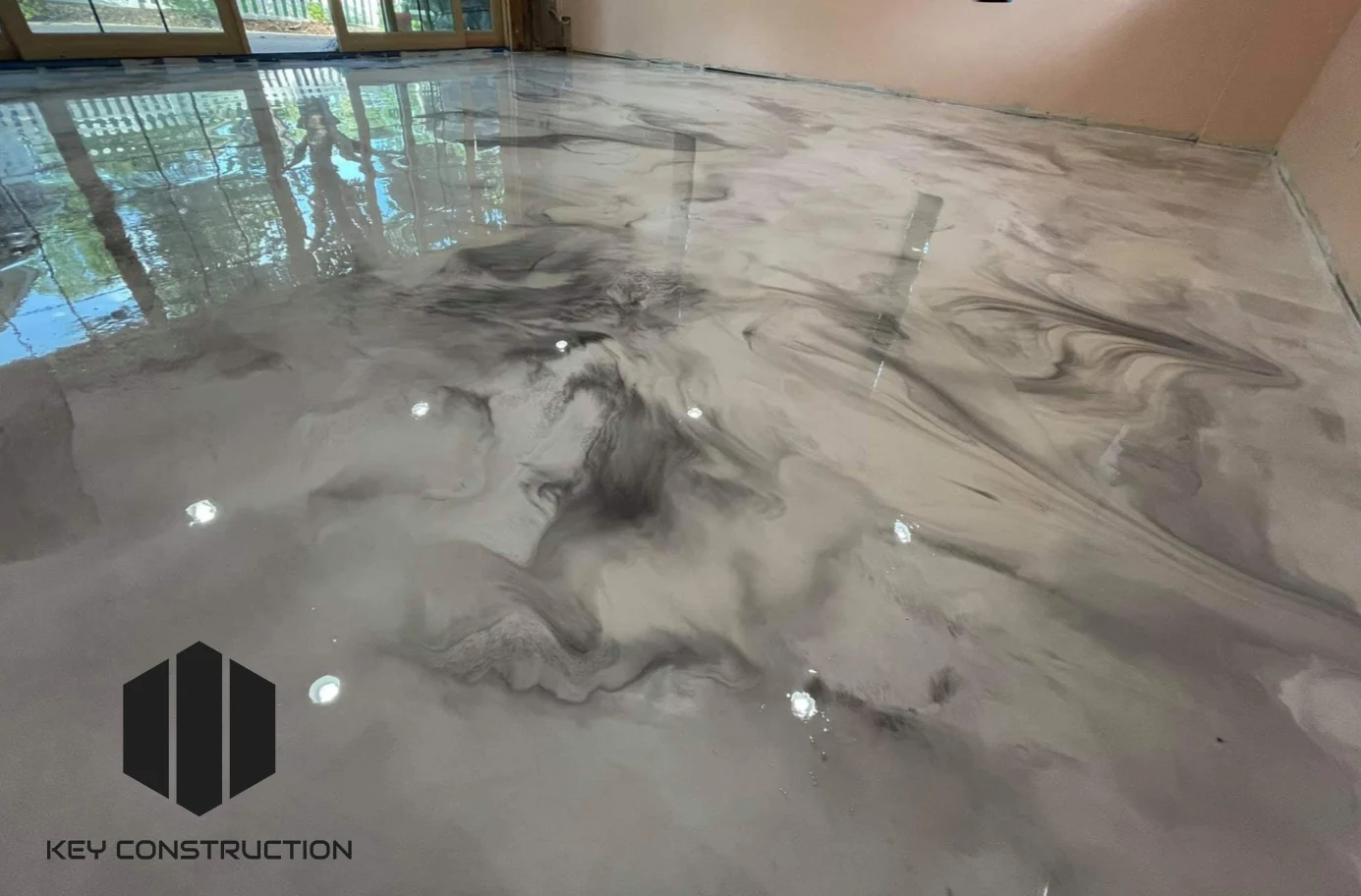
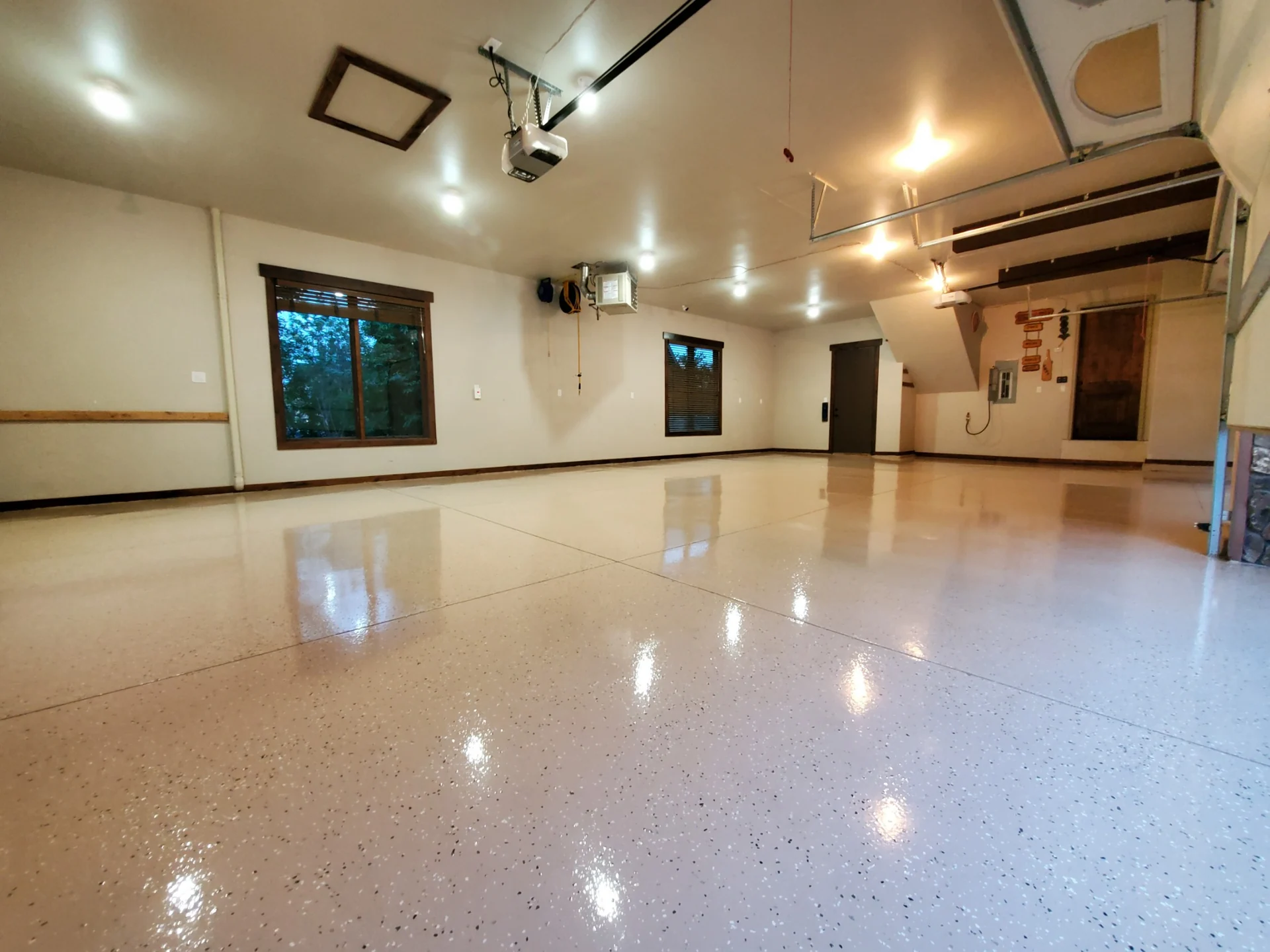
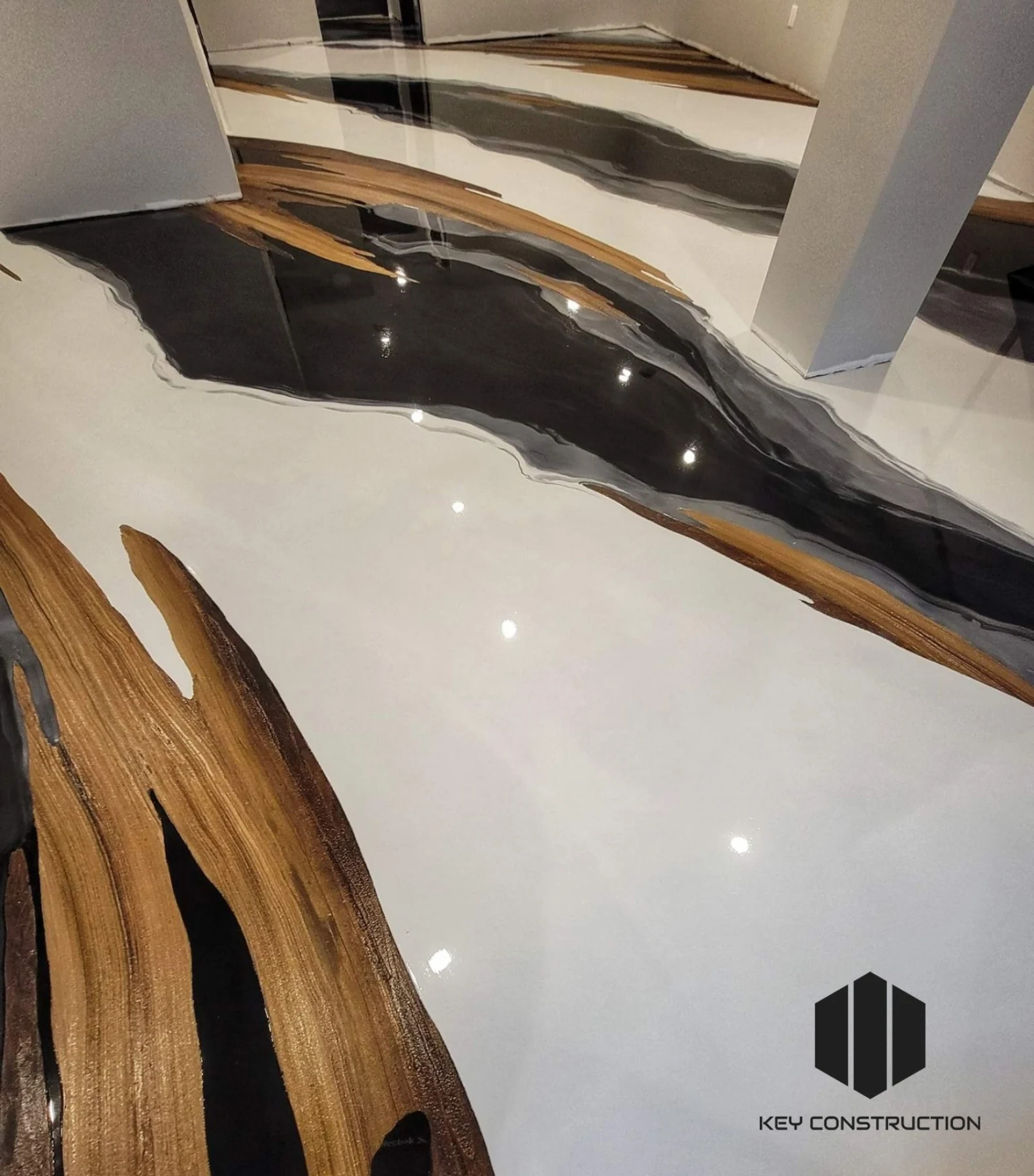
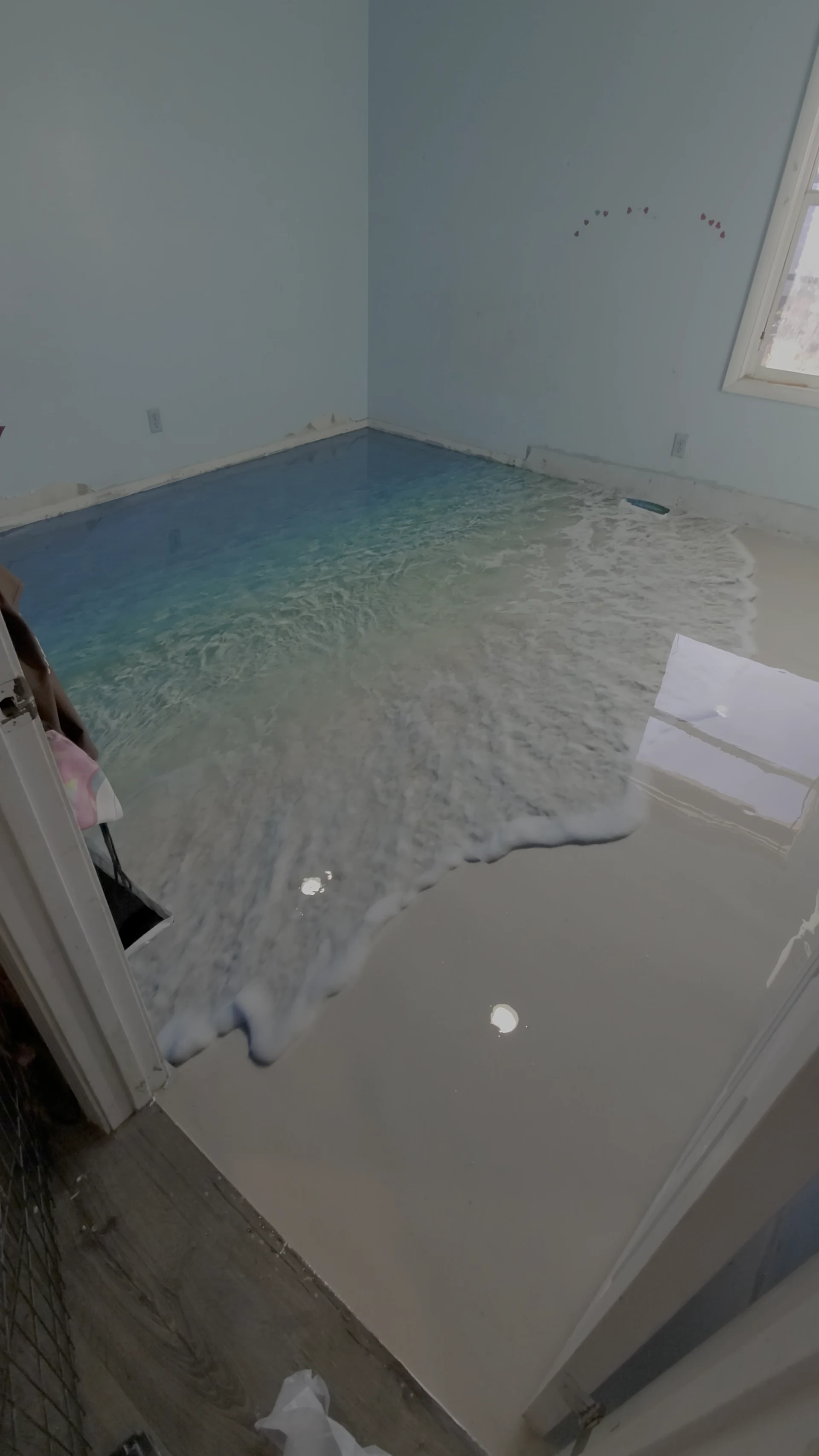
Texture. Movement. Character.Illustrative finish study; not catalogue samples.
Why the system matters
A floor that looks right on the first day still has to suit the way the space will be used. We review the concrete, existing coatings and contamination first, then consider the exposure and maintenance expectations. A decorative finish cannot compensate for an unsuitable substrate.
Start below the surface.
Cracks, weak concrete, oil and moisture conditions affect preparation, repair and product selection. Mechanical preparation is matched to the specified system; a moisture-related concern may call for testing and a compatible mitigation approach before decorative work.
Define the working conditions.
Vehicle turning, heavy loads, wet cleaning and chemical contact place different demands on a floor. UV exposure, temperature changes and thermal cycling also affect the assembly. We ask what the floor will encounter, not simply which color you prefer.
Plan for use after installation.
Cleaning routines, desired texture and appearance, installation conditions and the required return-to-service window all belong in the discussion. Fast cure is only one part of a workable schedule; preparation and repairs still need the time they require.
02 / A considered specification
Different environments. Different assemblies.
Finish, application and chemistry describe different parts of the decision. None tells the whole story alone.
THE SPACEGarageWhere the floor is used.
THE FINISHDecorative FlakeThe surface character.
THE ASSEMBLYCompatible layersHow the system is built.
01
Epoxy
A component of many priming, build and decorative layers. Formulation, substrate conditions and the complete assembly matter; exterior exposure needs careful product selection.
Learn more ↓Show less ↑
Epoxy can form the primer, body or decorative layer of a complete floor. The specified product and build must match the concrete, the intended use and the finish above it.
Before installation we review existing coatings, cracks, contamination and moisture conditions. The visible finish is chosen alongside the preparation and compatible protective layers—not separately from them.
Used in selected coatings and topcoats where application conditions, working time and return-to-service needs fit the product. It is not a universal substitute for preparation.
Learn more ↓Show less ↑
Polyaspartic coatings may be used in selected base coats or protective finishes. A compatible epoxy base with a polyaspartic finish and a full-polyaspartic build are different assemblies.
Working time, site temperature, moisture conditions and the manufacturer’s recoat requirements guide installation. A faster cure does not eliminate substrate preparation or repairs.
A family of protective topcoats with different finish and performance profiles. Compatibility with the layer beneath is part of the specification.
Learn more ↓Show less ↑
Polyurethane finishes are selected around the required appearance and service conditions. Gloss, texture and cleaning expectations form part of the discussion.
The finish must be compatible with the layer beneath it. We confirm the product, preparation between coats and cure requirements for the complete floor rather than treating every urethane as interchangeable.
A cementitious urethane system considered for demanding service conditions. Thermal exposure, thickness, drainage and detailing must be evaluated together.
Learn more ↓Show less ↑
Urethane cement combines a resin system with cementitious components. It is considered for demanding environments where the actual cleaning, thermal and chemical exposures need careful evaluation.
Thickness, floor falls, drains and transitions are specified together. Tell us how the space operates and when it must return to service so the proposed assembly can be checked against those conditions.
An aggregate-based assembly, rather than a single chemistry. Broadcast method, binder, seal coats and texture are selected for the intended environment.
Learn more ↓Show less ↑
A quartz floor combines graded aggregate with compatible resin layers and seal coats. Color is one decision; aggregate size, broadcast method and final texture also shape the result.
We consider cleaning, wet use, traffic and the existing concrete when recommending the build. Physical samples help confirm the appearance; a textured surface alone is not a universal slip-safety guarantee.
Different compatible chemistries may perform different jobs in one floor. Primer, build, decorative layer and protective finish are specified as an assembly.
Learn more ↓Show less ↑
A hybrid system uses compatible materials for different jobs: bonding to prepared concrete, building the body, creating a decorative surface and protecting the finish.
For example, a specified epoxy build may receive a compatible polyaspartic finish. Layer compatibility, recoat windows and substrate conditions must be checked as one assembly; products cannot simply be mixed by chemistry name.
Epoxy base + polyaspartic topcoat or a full-polyaspartic system?
Neither approach is automatically the better floor. The appropriate choice depends on the substrate, compatible products, installation conditions and the performance required from the complete assembly.
Epoxy-based build with a polyaspartic finish
An appropriate epoxy primer or base can establish the foundation for a broadcast or decorative system, with a compatible polyaspartic topcoat selected for the exposed finish. This approach lets different layers serve different purposes.
It may suit a project where the specified epoxy build, preparation needs and working sequence fit the scope. Recoat windows, cure conditions, surface preparation between coats and manufacturer compatibility must be respected; any epoxy and any topcoat cannot simply be combined.
Full-polyaspartic fast-cure build
A specified polyaspartic-based coating build may be considered where turnaround needs and site conditions favor a faster sequence. Products still need to be appropriate for direct contact with the prepared substrate and for the intended broadcast and finish layers.
Shorter working times require disciplined mixing, placement and coordination. Concrete moisture, temperature and humidity must fit the product requirements. A fast-curing coating does not remove the need for repairs, moisture evaluation or careful preparation.
Other conditions may point toward a polyurethane topcoat, a quartz assembly, urethane cement, a resin mortar/screed or another compatible multilayer system. Chemistry is one decision within the system—not a Good / Better / Best ranking.
The decorative surface is the part you see. A professional flooring system starts with the concrete—and decisions that affect adhesion, finish quality and long-term use.
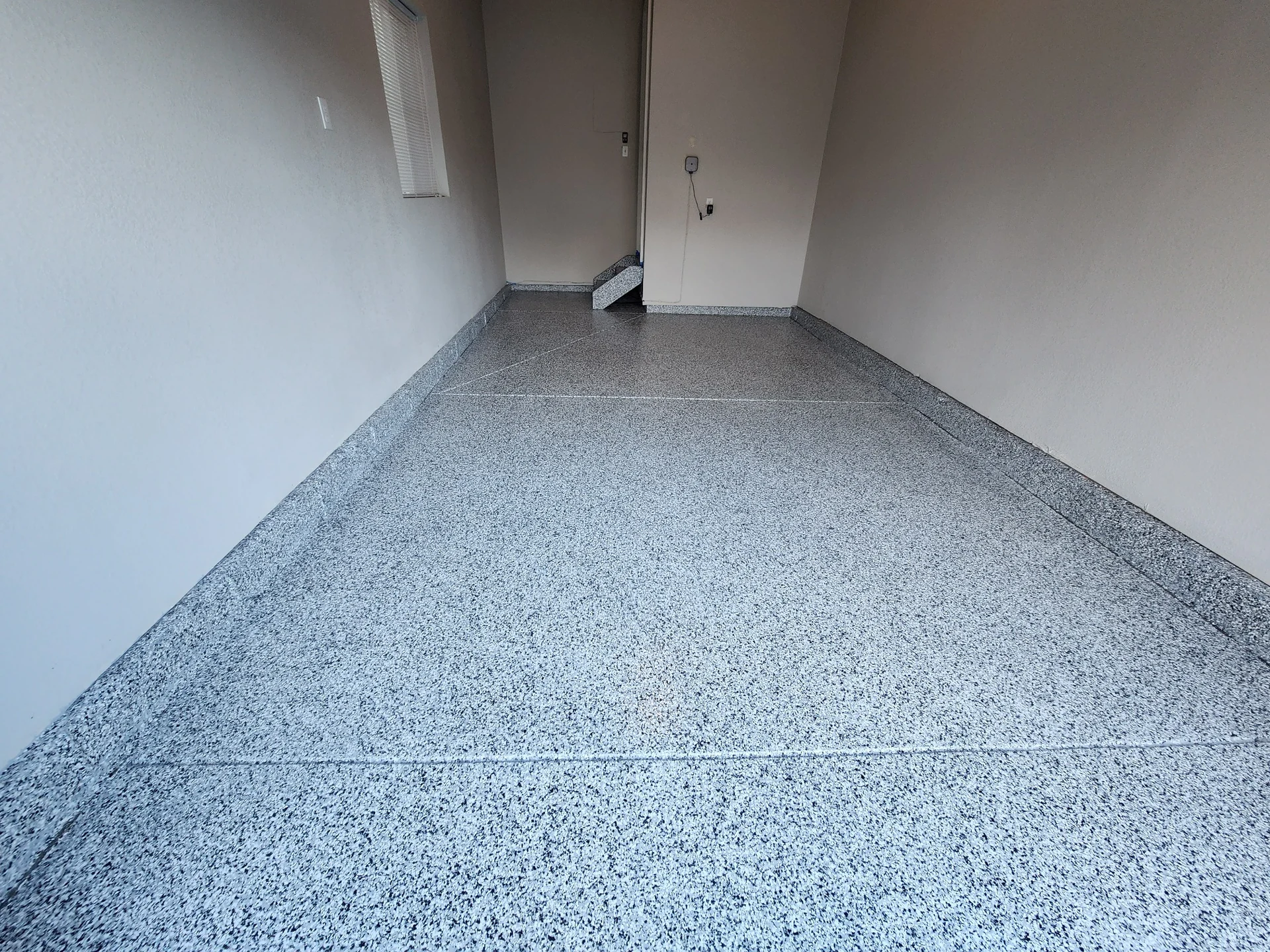
A finished Flake floor / Key Construction
These are key considerations in a professional installation, with full-broadcast Flake as one example. The scope and sequence are specified for the actual floor.
01
Mechanical Surface Preparation
Diamond grinding or other appropriate mechanical preparation creates the surface profile required by the selected system. Coating over an unsuitable surface puts adhesion at risk.
02
Concrete Evaluation & Repair
Cracks, defects, contamination, damaged concrete and moisture conditions are evaluated. Repairs, removal or moisture-related measures are addressed as required before the finish goes down.
03
Primer / Base System
Primer and base construction depend on the substrate and selected system. Compatible products and correct application conditions establish the foundation for the finish.
04
Broadcast / Decorative Layer
In a full-flake system, decorative flake is broadcast into the compatible coating to achieve the specified coverage. Other finishes use different decorative or aggregate stages.
05
Scrape / Vacuum / Refinement
After the appropriate cure, excess flake is removed and the surface is scraped, vacuumed and refined as specified. This prepares a consistent, clean surface for the protective finish.
06
Protective Topcoat
The final protective chemistry is selected around the application, exposure, cleaning and desired performance. Compatibility and cure requirements matter as much as appearance.
Different environments require different system builds. The visible finish may look simple. The preparation and chemistry underneath it determine how the floor is designed to perform.
Decorative flake / Key Construction
04 / Texture, deliberately chosen
Decorative flake systems.
A coordinated blend. A continuous surface.
What is a full-broadcast Flake floor?
Decorative flakes are broadcast across a compatible wet base to build an even, fully covered decorative layer. After curing, loose material is removed and the surface is scraped or refined as required before compatible seal coats are applied.
The result depends on the whole sequence: substrate preparation, repairs, base coverage, broadcast consistency, refinement and topcoat application. Flake size, blend and the selected seal coats influence appearance, texture and cleaning.
Garages are one application. Utility rooms and suitable commercial interiors can have different requirements—even with a similar visual finish.
Swipe or use the arrows to explore. Colour references from our Floor Studio collection; final colour, texture and availability are confirmed with physical samples.
05 / A surface with its own character
Metallic. Never ordinary.
Flowing pigments, reflected light and a considered color direction. Metallic remains one finish family, with each hand-applied floor carrying its own movement.
More about metallic epoxy
Learn more ↓Show less ↑
Metallic pigments create depth and movement within the resin layer. Color combinations, application technique and lighting influence the finished appearance; every hand-applied floor has variation.
We review the room, concrete condition and intended use before proposing the preparation, decorative build and compatible protective finish. Use the samples below to choose a color direction, then confirm that direction with physical samples and a project discussion.
Swipe or use the arrows to explore. Colour references from our Floor Studio collection; final colour, texture and availability are confirmed with physical samples.
Movement & contrastColor & reflection
Start with the space
What should your floor do?
A few details and photos give us a useful place to begin.
A solid-color system gives the room a clean visual foundation. Substrate refinement matters: a uniform finish can make surface irregularities more visible.
Another way to interpret stone.
Marble-effect resin designs bring controlled veining and movement into the floor. We coordinate the overall direction with the room while respecting the natural variation of an applied finish.
Solid colour collection
Explore the finish.
Find the colour and character for your space.
White Resin 011 / 16 finishes
Swipe or use the arrows to explore. Colour references from our Floor Studio collection; final colour, texture and availability are confirmed with physical samples.
07 / The character of aggregate
Natural stone. A different texture.
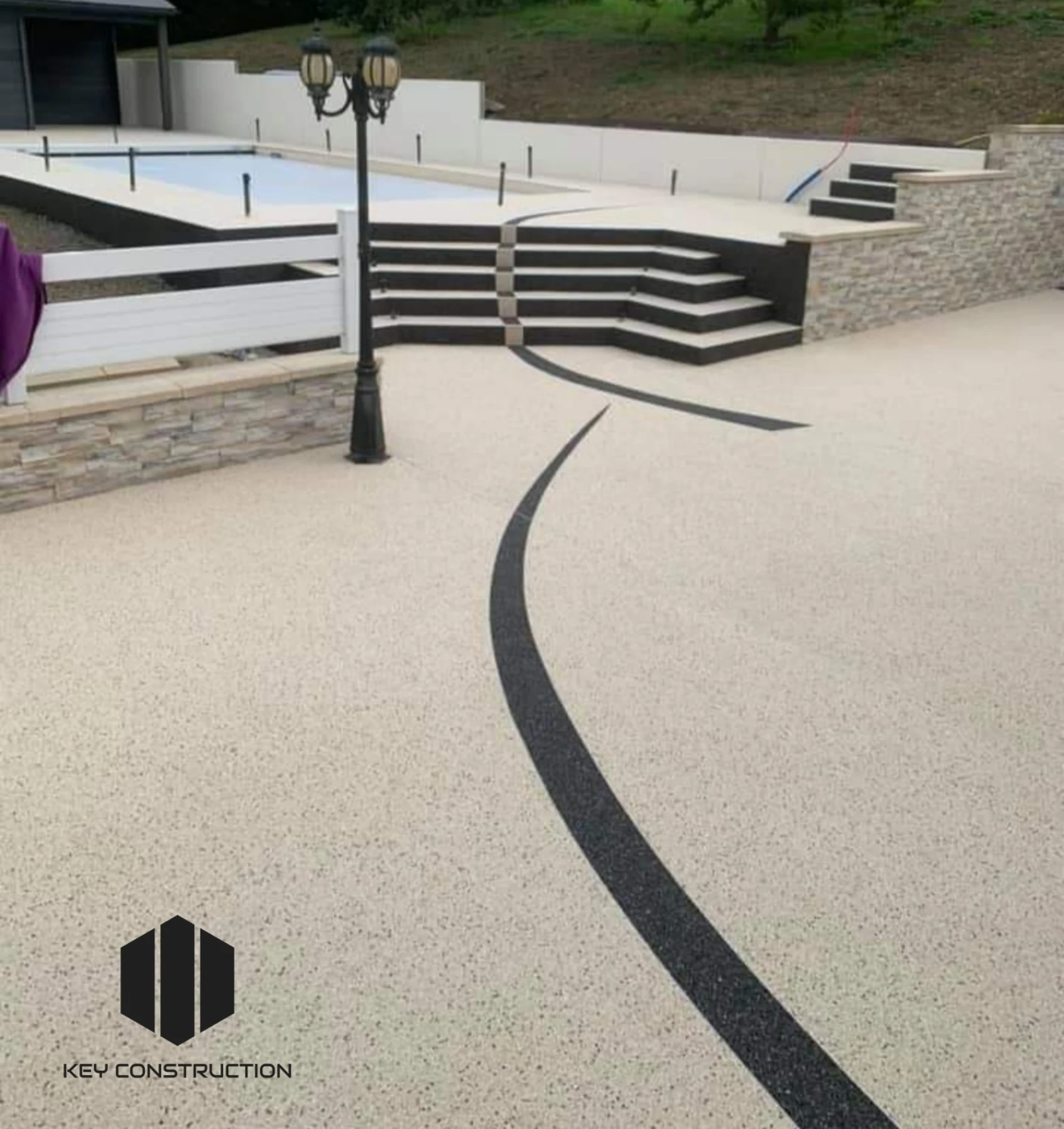
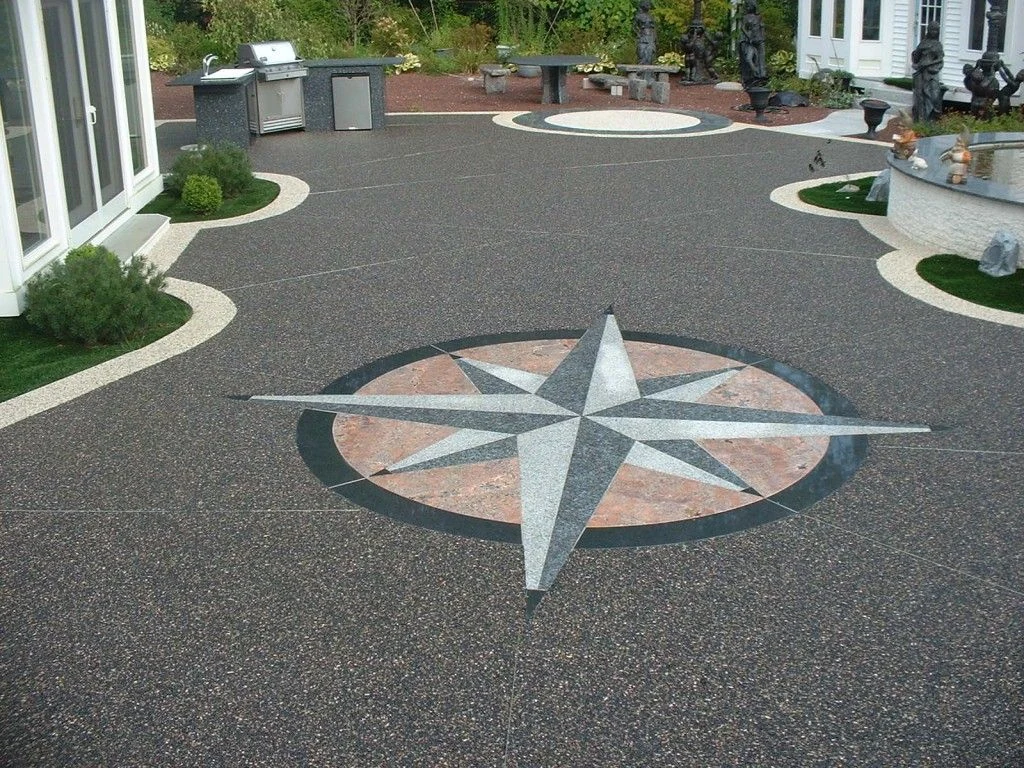
Resin-bound natural stone, also called stone carpet, brings aggregate, pattern and borders together. Binder, base, drainage and exposure must suit the installation.
Natural stone collection
Explore the finish.
Find the colour and character for your space.
Red Stone 011 / 45 finishes
Swipe or use the arrows to explore. Colour references from our Floor Studio collection; final colour, texture and availability are confirmed with physical samples.
Curved borders & transitionsPattern within the surface
Interior, exterior and vehicle-use assemblies have different requirements. Outdoor suitability is confirmed for the selected system and project conditions.
08 / Texture as part of the specification
Quartz systems. Built for the use.
Quartz collection
Explore the finish.
Find the colour and character for your space.
Blue Mineral 011 / 100 finishes
Swipe or use the arrows to explore. Colour references from our Floor Studio collection; final colour, texture and availability are confirmed with physical samples.
Fine aggregate within a complete resin assembly.
Decorative quartz uses graded colored aggregate broadcast into compatible resin layers. Depending on the specified build, additional aggregate and seal coats create a dense, textured surface whose performance comes from the complete system—not from loose granules alone.
Quartz can be considered for selected residential, wet-use and commercial environments where texture, wear and cleaning requirements support it. The concrete condition, moisture, traffic, chemicals, drainage and desired maintenance routine guide the specification.
Preparation remains fundamental. Existing coatings, weak concrete, cracks and contamination are evaluated before mechanical preparation, repairs and any required moisture-related measures. At transitions, drains and vertical details, the assembly needs the same attention as the open floor.
Texture can contribute to traction, but it is not a universal slip-safety guarantee. Aggregate size, broadcast density and seal-coat build also affect how the floor feels underfoot and how readily it can be cleaned.
Decorative garage floors are one application within a much broader field of polymer/resin flooring. The same system-selection discipline extends to commercial and industrial environments.
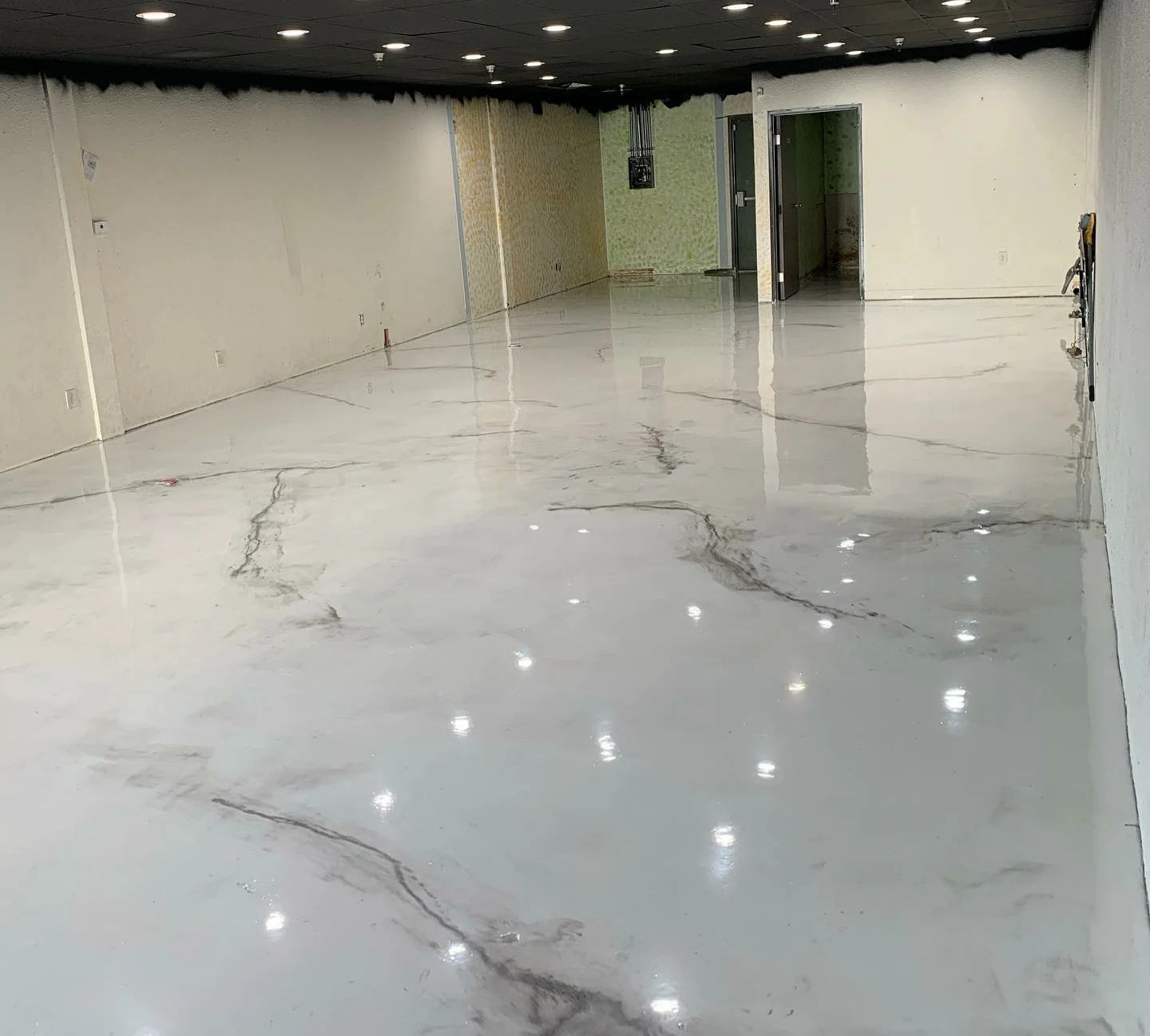
Designed around the working environment.Illustrative commercial application.
Beyond garage floors
Our hands-on experience includes multilayer polymer systems, primers, broadcast aggregate and quartz systems, intermediate layers, grinding/refinement and protective topcoats. Resin mortar and screed approaches are also part of understanding how a thicker build differs from a coating. That knowledge helps us evaluate a floor as an assembly rather than a decorative product alone.
We understand how flooring systems change when the environment changes. The applications below describe conditions we can evaluate with project-specific requirements and technical product guidance; they are not a list of completed Key Construction facilities or certifications.
Restaurants, food service & wash-down
Cleaning chemicals, wet service, drainage, texture, thermal changes and maintenance.
Warehouses, workshops & automotive
Mechanical load, vehicle turning, wear, impact and installation access.
Manufacturing & aircraft-related spaces
Actual chemical exposure, traffic and operating requirements—not a generic “industrial” label.
Controlled, healthcare-related & cold spaces
Owner-defined hygiene, cleaning, temperature and operational criteria. Any special classification or certification needs separate verification.
LOAD / EXPOSURE
Performance is contextual.
Mechanical load, chemical exposure, wet conditions, drainage and cleaning routines shape the recommendation. Installation access and return-to-service requirements shape the plan.
URETHANE CEMENT
Consider the whole environment.
For demanding wash-down, thermal or chemical conditions, urethane cement may be part of the discussion. Product selection, thickness, substrate and detailing must fit the actual exposure.
CONCRETE PROTECTION
Keep the concrete in focus.
Sealing and protective treatments are selected around the condition and use of the concrete. Appearance, moisture behavior, exposure and future maintenance all matter.
10 / Evaluate before you specify
Complex floor? That’s where experience matters.
We review what is there before recommending what goes on top. Some conditions require repair, removal, mitigation or a different approach.
A lasting finish starts below the surface.Illustrative preparation scene.
11 / Real Key Construction work
A closer look at the possibilities.
Explore 12 selected photographs and one silent walk-through from Key Construction flooring work. Open any image to see the details.
The next way to explore
Key Construction Floor Studio.
Build a visual starting point for your garage: enter the floor size, compare available coating systems and finishes, then review a preliminary planning estimate before requesting site verification.
Owner-led. Start to finish.
Professional systems. Premium materials. Continuous training.
Key Construction’s owner brings 20+ years of hands-on construction and coatings experience, including historical work with systems and materials such as Caparol and Silikal. More than a decade working in Colorado continues that practical experience across remodeling and specialty flooring.
Today we select professional-grade U.S. systems and premium materials around the job rather than a single brand. Continuing technical learning, product education and current installation guidance support those decisions. Historical material experience does not imply a current manufacturer affiliation or certification.
Every project remains under direct oversight of Key Construction’s owner—from preparation through critical installation stages and final review. Specialized trades are coordinated when needed.
20+Years hands-on experience
10+Years serving Colorado
Material availability varies by supplier, system and project. We confirm the selected assembly and schedule for your scope.
Colorado is home
Flooring expertise. Denver Metro reach.
Residential, commercial and specialty flooring projects across the metro area. Our Colorado experience also includes specialty decorative/commercial metallic flooring with integrated LED design, bringing finish design and installation details together.
Share your location, existing floor conditions and operating requirements to confirm availability and the appropriate next step.